Vehicle ownership involves deciding which problems can fit into a maintenance schedule and which demand immediate attention. A worn interior trim piece rarely deserves the same urgency as a damaged tire, yet unfamiliar noises and warning lights can make those distinctions difficult. Understanding the purpose of a failing component helps drivers make better decisions without assuming every symptom requires a complete replacement.
Professional auto service provides the diagnosis needed to separate normal wear from a developing failure. Replacement should follow confirmed damage, failed testing, or the vehicle manufacturer’s maintenance requirements. The nine categories below deserve particular attention because they affect control, visibility, dependable operation, or protection during a collision. Their order here is a practical overview; the condition of the vehicle determines which repair takes priority.
1. Tires That Can No Longer Provide Dependable Traction
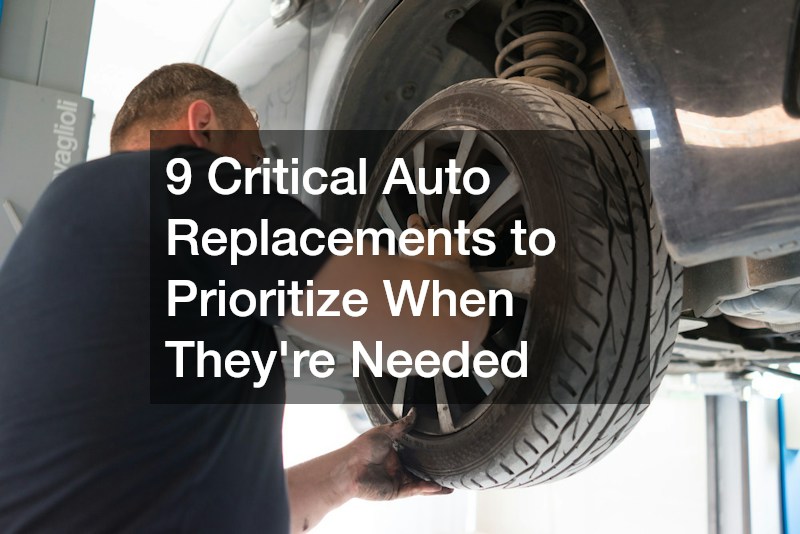
Tires connect every steering and braking input to the road, making their condition central to safe driving. Scheduling auto tire replacement becomes urgent when an inspection identifies exposed cords, significant sidewall damage, or other conditions that make continued use unsafe. Tread wear also matters, but a tire can require replacement even when its tread appears substantial.
An isolated vibration or a vehicle pulling to one side does not establish that the tires are the only problem. Wheel damage, alignment concerns, and suspension wear can produce overlapping symptoms. A professional inspection should explain what caused the condition and whether related work is needed. Otherwise, new tires may develop the same wear pattern as the old set.
Selection deserves as much attention as timing. Drivers considering performance auto parts should remember that tire suitability depends on the vehicle’s specifications, climate, and actual driving conditions. A tire selected primarily for an appealing tread pattern may be poorly matched to everyday needs. Proper size, load capacity, and compatibility with the other tires take priority over appearance.
Replacement planning should also account for the manufacturer’s guidance on matching tires, particularly on vehicles sensitive to differences in tire circumference. Ask whether the condition of the remaining tires affects the recommendation. The goal is a compatible set that supports predictable handling, with any underlying source of abnormal wear addressed as part of the work.
2. Brake Components That Have Reached Their Limits
Brakes wear through normal use, but their replacement needs vary with driving conditions and component condition. Pads, rotors, calipers, and hydraulic components perform different jobs, so an estimate should identify the actual failure. Grinding, reduced stopping response, or a significant change in pedal feel deserves prompt evaluation rather than an assumption that ordinary pad wear explains everything.
A thorough auto service assessment can distinguish a worn friction surface from a sticking component, a leak, or another concern. That distinction affects both the replacement list and the urgency of the work. Continuing to drive with compromised braking can increase the damage and leave the driver with less control when a sudden stop becomes necessary.
Ask the technician to explain measurements and inspection findings in terms of the manufacturer’s requirements. Rotors do not automatically need replacement whenever pads are changed, but their thickness, condition, and suitability for continued use matter. Similarly, replacing a damaged component without correcting the reason it failed can leave uneven braking or accelerated wear unresolved.
If both brake work and auto tire replacement are needed, discuss them together when setting priorities. Brakes help slow wheel rotation, while tires provide the grip that transfers braking force to the road. Improving one cannot make up for a serious defect in the other. A vehicle with unsafe braking or tire damage may require transportation to the shop rather than another drive.
3. A Failing Battery or Charging Component
Slow cranking, repeated starting trouble, or electrical warning messages can make a battery replacement seem obvious. However, auto electrical repair should begin with testing because a weak battery, charging fault, poor connection, or unwanted electrical drain can produce similar complaints. Installing a new battery without identifying the cause may provide only a temporary improvement.
The replacement must match the vehicle’s requirements, including the correct battery type and capacity. Some vehicles also require a registration or reset procedure after installation. These details are especially relevant when the vehicle uses stop-start technology or sophisticated energy management. A battery that physically fits the tray is not necessarily the right choice for the system.
When comparing used truck parts for an older vehicle, give electrical compatibility particular attention. Connectors, control strategies, and output requirements can differ among versions that look similar. A previously used alternator should not be chosen solely because it came from the same general model. Exact fitment and a clear understanding of its condition are essential selection criteria.
Unreliable starting is inconvenient, but a charging failure can also interrupt a trip after the engine is already running. Report whether the problem occurs after sitting overnight, during short trips, or while driving. That pattern helps direct testing. Replace the component shown to be defective, and have related connections and charging performance checked before considering the problem resolved.
4. Deteriorated Belts, Hoses, and Cooling Components
Engine cooling depends on several components working together, including hoses, the radiator, the water pump, and fans. Leaks, damaged hoses, or a confirmed pump failure can make replacement a priority. A rising temperature gauge or overheating warning requires immediate attention because continued operation can turn a limited cooling problem into substantial engine damage.
Upgraded radiators and other performance auto parts require the same careful compatibility checks as standard replacements. Extra cooling capacity on a product label does not establish that a component suits the engine or surrounding equipment. Before approving an upgrade, understand whether it requires modifications and how those changes would affect the vehicle’s operation and future maintenance.
Belts deserve a separate discussion because they do not all serve the same purpose. An accessory belt drives equipment outside the engine, while a timing belt coordinates internal engine movement on vehicles that use one. Timing belt replacement should follow the applicable manufacturer schedule. Waiting for an obvious symptom can be inappropriate when failure may occur without much warning.
Cooling complaints sometimes require auto electrical repair rather than replacement of the radiator or hoses. For example, an inoperative electric fan may involve its motor, wiring, controls, or power supply. Confirming the cause prevents unrelated parts from being replaced. The repair plan should explain both what failed and how the technician will verify normal temperature control afterward.
5. Damaged Exhaust Components
An exhaust system carries engine gases away from the vehicle and helps control sound. Corroded muffler parts can create excessive noise, but loose connections, damaged pipes, and failed supports may also need attention. A noticeably louder vehicle deserves an inspection because the sound alone cannot reveal the location, extent, or significance of the damage underneath.
Exhaust damage is not merely an annoyance. A leak may create a risk of gases entering the passenger compartment, and hanging components can contact the road or nearby equipment. Exhaust odor inside the vehicle calls for stopping use and arranging professional evaluation. An open window should never be treated as a substitute for correcting the problem.
Condition is especially important when evaluating used truck parts for an exhaust repair. A component with hidden corrosion or weakened mounting points may offer little useful service even if its exterior looks acceptable. The selection should account for the entire part, its connections, and compatibility with the vehicle. Availability alone does not establish that a replacement is suitable.
The inspection should distinguish a damaged exhaust section from unrelated engine problems that affect sound or performance. Replacing a muffler will not correct every rattle or loss of power. Ask which components are compromised and whether adjacent pipes and supports remain sound. A clearly defined repair scope helps prevent a partial fix that leaves another weak section untreated.
6. Broken Headlights, Taillights, and Signal Assemblies
Exterior lights help drivers see the road and communicate with others. A failed brake light, damaged headlight, or missing turn signal deserves prompt attention because it changes what other road users can perceive. Replacement may involve a bulb, a sealed assembly, or another component, depending on the design and the source of the failure.
Following an impact, a collision repair shop can evaluate more than the visible lamp lens. Broken mounting points, displaced surrounding panels, and damaged connectors can prevent a replacement light from sitting correctly or operating reliably. The estimate should address those related conditions so the repair restores proper placement as well as illumination.
Moisture inside a light assembly deserves evaluation, particularly when it persists or accompanies electrical problems. The technician should determine whether a seal, housing, or connection has failed before recommending parts. Headlight aim also needs attention when an assembly or its mounting position changes. A functioning lamp can still provide poor visibility if it points incorrectly.
When comparing auto body shops for lighting damage, ask whether their repair scope includes checking mounts, electrical operation, and headlight alignment where applicable. Those details help distinguish a complete correction from a simple parts swap. Replacement decisions should reflect the design of the damaged system, especially when lighting functions are integrated into a larger assembly.
7. Glass That No Longer Supports Clear Visibility
A damaged windshield can interfere with the driver’s view, while broken side or rear glass can leave the cabin exposed. Glass replacement may also need coordination with auto body repair when an impact has distorted the surrounding opening. Installing new glass without resolving damage around it can create fit, sealing, or installation problems.
Not every windshield chip requires replacement, and not every crack can be repaired. Size, location, depth, and the specific glass design influence the recommendation. Have a qualified professional evaluate the damage before assuming a small mark is harmless. Damage directly in the driver’s field of view deserves particular attention because visibility may remain affected even when the opening is limited.
Glass work involving collision damage can cross several specialties, so confirm how auto body shops coordinate the installation and any required calibration. Some windshields support cameras or other driver assistance equipment that must be addressed under the manufacturer’s procedures. Clarifying responsibility helps ensure the final repair accounts for the equipment attached to or operating through the glass.
Completion involves more than confirming that the new pane looks clear. Follow the installer’s instructions about when the vehicle can be driven and any temporary restrictions. These directions can depend on the installation materials and conditions. Report unusual wind noise, water intrusion, or warning messages so they can be evaluated before they become persistent problems.
8. Body Panels That Cannot Be Properly Restored
Body damage ranges from minor dents to panels with sharp edges, severe distortion, or failed mounting areas. Replacement becomes appropriate when a panel cannot be restored through an acceptable repair method. The decision should consider its material, damage location, and the manufacturer’s procedures. A panel that looks repairable from the outside may have compromised areas hidden behind it.
An auto body repair estimate should explain why replacement is recommended and identify the surrounding work it requires. Adjacent panels may need alignment checks, and underlying damage may become apparent after disassembly. Clear documentation gives the owner a useful basis for understanding the scope rather than treating the panel as an isolated cosmetic purchase.
Doors and hoods require special attention because their hinges, latches, and alignment affect how they function. A replacement panel should open, close, and secure correctly without interference. Water sealing and fit also matter. An attractive paint finish does not establish that these practical requirements have been met, so discuss function alongside appearance when reviewing the completed work.
Impact damage can extend below the visible bodywork, including to pipes, supports, and muffler parts. That possibility makes a broader inspection important when the collision involved the underside or rear of the vehicle. Replacing an exterior panel should not end the investigation if unusual noise, vibration, or displaced components suggest another area still needs attention.
9. Compromised Bumpers and Impact Protection Components
A bumper cover can hide damage to reinforcement, energy absorbers, and mounting structures. A collision repair shop should assess those components before deciding that replacing or refinishing the outer cover completes the job. The repair method needs to reflect the impact and the vehicle’s design, including any sensors located in or behind the damaged area.
Appearance offers an incomplete guide to damage severity. A cover may spring back into shape while components beneath it remain distorted or broken. Conversely, a visibly scratched cover does not automatically mean every supporting part requires replacement. Inspection and applicable repair procedures should determine the parts list, with a clear distinction between cosmetic damage and compromised protective components.
The questions owners ask auto body shops can make these recommendations easier to understand. Ask which hidden components were inspected, what requires replacement, and whether sensor positioning or calibration is involved. A clear explanation connects the proposed work to the damaged vehicle. It also helps identify dependencies that must be completed before the vehicle is ready for use.
Prioritize restoring the intended protective function over making the vehicle look finished quickly. Reinforcements, absorbers, brackets, and sensor mounts each have a defined role, and their replacement requirements vary. Keep the estimate, repair documentation, and any relevant calibration records together. Those records provide a useful account of what was inspected and restored after the collision.
Make Replacement Decisions With a Clear Order of Priority
Whether recommendations come from a mechanical specialist or auto body shops, ask what makes each replacement necessary and how urgently it must be completed. Problems involving braking, tire integrity, visibility, overheating, or collision protection deserve careful prioritization. When several repairs overlap, have the professionals explain their sequence so one replacement does not leave an underlying problem unresolved.
A practical plan combines confirmed findings, compatible parts, and a clear understanding of when the vehicle can be driven safely. Keep records of completed work and upcoming maintenance requirements to reduce guesswork later. Replacing a component at the right time protects more than that individual part; it helps preserve the reliability and function of the vehicle as a whole.