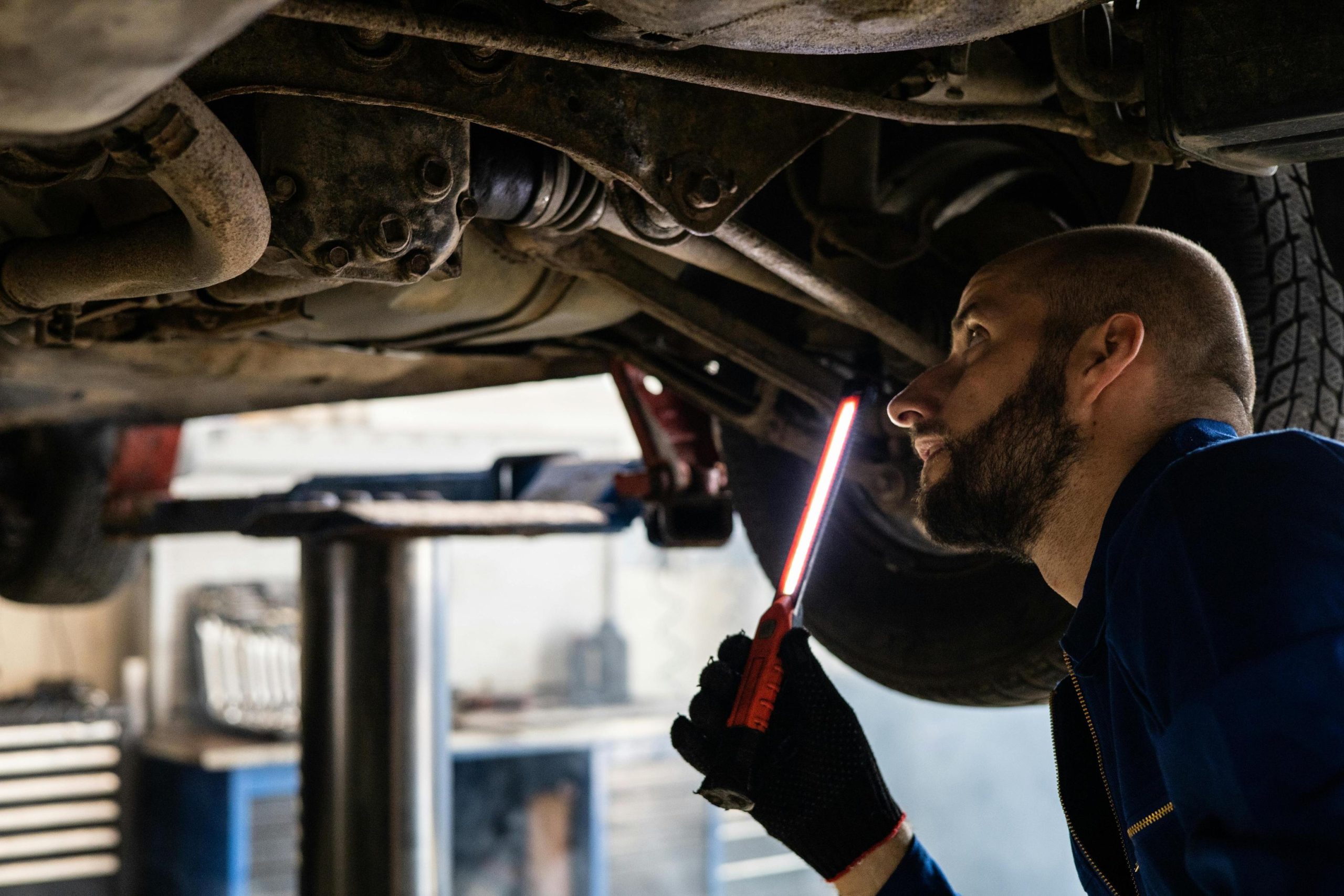
In an era where new vehicle prices remain elevated and monthly car payments often resemble mortgage contributions, holding onto an older automobile has never looked more appealing. The mathematical argument seems straightforward on the surface: avoiding a hefty monthly loan payment by keeping a paid-off 10, 15, or 20-year-old commuter car running should save thousands of dollars annually.
However, the reality of reviving or maintaining a high-mileage daily driver is rarely as simple as routine oil changes and the occasional set of new tires. Deferred maintenance accumulates silently over time. Rubber seals dry out, electrical systems develop gremlins, suspension components soften, and rust imperceptibly degrades structural metal. What begins as a quick project to refresh a faithful old hatchback or sedan can quickly transform into a cascading series of unexpected mechanical and cosmetic expenses.
To successfully navigate the process of bringing a classic commuter or neglected project car back to absolute reliability, you need a clear-eyed financial strategy. This comprehensive guide breaks down the true expenses associated with resurrecting an aging vehicle, covering initial triage, mechanical resuscitation, structural restoration, and aesthetic preservation, helping you decide whether to keep turning wrenches or finally hand over the title.
Diagnosing Non-Runners and Triage Logistics
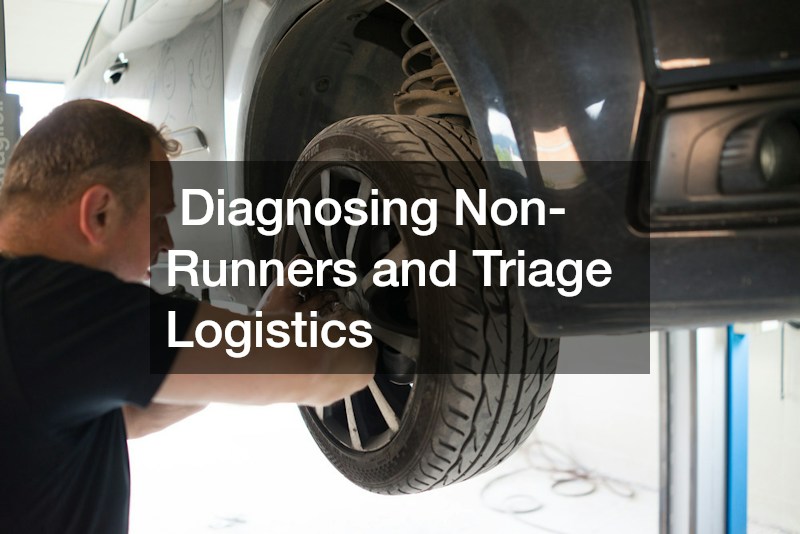
Before you can turn a wrench or order fresh parts, you must safely move the vehicle to a workspace or diagnostic facility. If the car has been sitting in a driveway, barn, or backyard for an extended period, attempting to start it immediately is one of the most expensive mistakes you can make. Stale fuel clogs injectors, dry cylinder walls score under cranking pressure, and degraded engine oil fails to protect delicate bearings.
Getting an immobile or untrustworthy vehicle from its resting place to a reliable repair facility requires proper equipment. Utilizing a flatbed towing company ensures that locked brakes, seized differentials, or rotten tires do not cause severe drivetrain or chassis damage during transport. Budgeting for professional transport is a mandatory first expense when rescuing a non-runner.
During this initial triage phase, you should focus on establishing a clear baseline before spending significant money on cosmetic or secondary repairs:
-
Fluid Evaluation: Drain and inspect engine oil, transmission fluid, and coolant for signs of cross-contamination, such as milky oil from a blown head gasket or metallic shimmer from bearing wear.
-
Fuel System Inspection: Siphon out varnish-like old gasoline, drop or flush the fuel tank, and replace fuel filters to prevent contaminated fuel from ruining fresh fuel pumps or injectors.
-
Electrical Health Check: Inspect the wiring harness for rodent damage, clean corroded ground straps, and install a fresh, properly rated battery to ensure stable voltage for onboard control modules.
Once the engine turns over safely, the next critical inspection focuses on the chassis and suspension. A car can run flawlessly, but if its unibody structure is compromised by deep scale rust or past unrecorded frame damage, it is fundamentally unsafe for daily highway commuting.
Elevate the vehicle securely on jack stands and inspect subframe mounts, suspension pick-up points, floor pans, and rocker panels with a screwdriver or body hammer. Flaking surface rust is manageable, but structural metal that crumbles under light pressure indicates severe structural fatigue that requires specialized welding.
Simultaneously, evaluate the condition of suspension bushings, ball joints, control arms, and tie rod ends. Worn suspension components allow wheel geometry to shift under load, causing severe vehicle wander, increased stopping distances, and rapid tire destruction. After replacing dry-rotted rubber bushings or bent suspension links, scheduling precision wheel alignments is essential to return steering geometry to factory specification, ensure straight tracking, and maximize the lifespan of your new tires.
Engine, Transmission, and Fluid Resuscitation
Achieving daily-driver reliability means eliminating the risk of sudden mechanical breakdowns that leave you stranded during a morning commute. This stage demands a methodical approach to the engine bay and transmission, focusing on items that age over time regardless of mileage.
Start by replacing all rubber hoses, vacuum lines, and drive belts. Rubber degrades internally due to heat cycling and ozone exposure, leading to sudden cooling system bursts or snapped serpentine belts that cause instant engine overheating.
-
Cooling System Overhaul: Replace the water pump, thermostat, radiator caps, and upper/lower radiator hoses. A single severe overheat event can warp an aluminum cylinder head, turning a minor maintenance job into a multi-thousand-dollar overhaul.
-
Ignition Refresh: Install new spark plugs, ignition coils, or distributor components. Fresh ignition hardware restores lost fuel economy, smooths out rough idling, and prevents unburned fuel from ruining expensive catalytic converters.
-
Transmission Service: Drain and replace transmission fluid and filters. Avoid high-pressure flushes on high-mileage automatic transmissions, as sudden fluid pressure changes can dislodge internal deposits and cause valve-body slipping; opt for gentle fluid drain-and-fills instead.
Exhaust, Emissions, and Noise Management
An aging daily driver must pass local safety and emissions inspections to remain road-legal. Neglected exhaust systems frequently suffer from severe rust, broken manifold studs, and blown gaskets caused by engine movement and moisture accumulation inside the pipes.
Exhaust leaks do more than create embarrassing noise; they allow dangerous carbon monoxide fumes to seep into the cabin and disrupt oxygen sensor readings, causing the engine management computer to run an overly rich fuel mixture.
When addressing rusted exhaust pipes, cracked manifolds, or failing catalytic converters, sourcing a cost-effective car muffler repair solution allows you to eliminate raspy exhaust notes, pass state tailpipe emissions tests, and restore quiet, comfortable cabin acoustics without purchasing overly expensive full-system replacements from a dealership parts counter.
Repairing Body Panels, Rust Spots, and Structural Bumper Damage
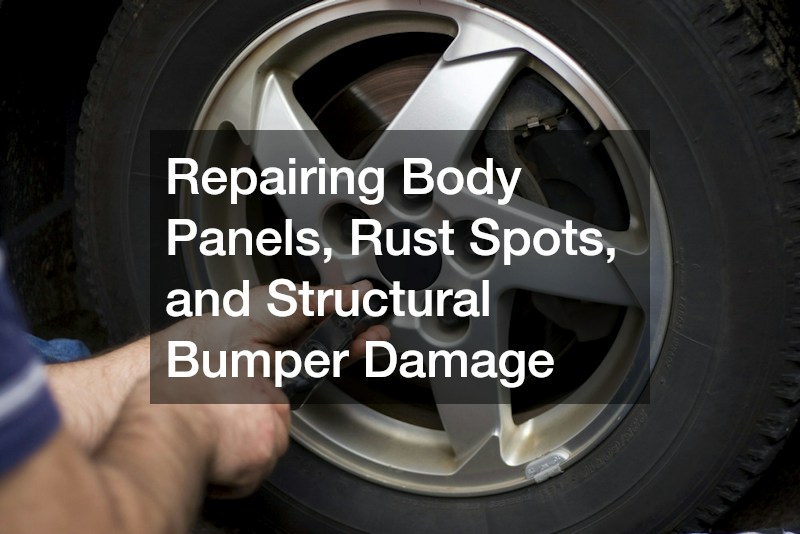
A vehicle that runs well mechanically can still fail state safety inspections or suffer rapid degradation if exterior body rust and panel damage are left unaddressed. Moisture, road salt, and dirt collect inside wheel arches, lower door edges, and rocker panels, eating away sheet metal from the inside out.
Addressing panel damage early prevents minor cosmetic flaws from expanding into major structural rot. Small dents and surface rust spots can be sanded down, treated with rust-converting primers, and sealed. However, if the car has suffered minor fender benders or deep structural creases during its previous life, simple surface patching will not suffice.
Restoring damaged sheet metal, re-aligning compromised bumper supports, and repairing cracked impact structures requires professional expertise. Investing in high-grade collision repair ensures that impact zones are restored to their original strength, protecting occupants in the event of a future accident and ensuring exterior panels align correctly with factory body gaps.
Partnering with Professional Metal and Frame Specialists
While basic mechanical tasks like changing spark plugs or brake pads are well within the reach of an ambitious home mechanic, complex metal fabrication, panel replacement, and paint blending require specialized machinery and trained hands. Attempting to repair deep quarter-panel rust with expanding foam and body filler is a short-term fix that fails within months.
When sheet metal rot extends into inner wheel wells or door sills, cutting out the infected metal and welding in fresh steel patch panels is the only permanent solution.
Entrusting complex metal restoration and frame straightening to a reputable auto body repair shop guarantees that repairs are completed using industry-standard welding procedures, proper corrosion-proofing compounds, and exact paint-matching techniques that preserve the vehicle’s structural integrity and resale value.
Protecting Degraded Clear Coat and Refreshing Exterior Aesthetics
Sun exposure, environmental fallout, and harsh winter weather wear down a car’s original paint finish. After 10 to 20 years, clear coats crack, flake, and peel—a condition commonly known as clear-coat failure. Once the protective clear layer dissolves, base paint oxidizes rapidly, leaving bare metal exposed to the elements.
A traditional full-body respray involves extensive labor: removing trim, sanding down old paint, repairing imperfections, applying primer, spraying base and clear coats, and wet-sanding to a mirror shine. This process often costs more than the market value of an older daily driver.
Fortunately, modern automotive cosmetic technology provides alternative methods to preserve and refresh tired exteriors. Applying specialized vehicle wraps allows you to completely transform the color and appearance of your daily driver while sealing underlying panels against further environmental degradation, achieving a clean finish at a fraction of the cost of high-end custom paint jobs.
Professional Application vs. Paint Restoration
Before applying any exterior vinyl film or protective coating, the underlying bodywork must be meticulously prepared. Vinyl materials conform tightly to every curve and imperfection on a panel; any rust bubble, deep scratch, or flaking paint edge beneath the film will show through clearly on the surface.
Proper prep work involves repairing surface rust, sanding down flaking clear coat until smooth, filling minor surface dings, and thoroughly decontaminating the paint surface with isopropyl alcohol.
Partnering with an experienced auto wrapping service ensures that vinyl materials are stretched, laid, and post-heated correctly around door jambs, recessed handles, and complex bumper contours. Professional application prevents premature lifting, peeling, or water intrusion along panel edges, giving your daily driver a durable finish capable of withstanding daily car washes and highway weather conditions.
Upgrading Glass, Heat Rejection, and Cabin Preservation
Restoring a daily driver is not solely about exterior aesthetics and engine health; the interior cabin environment dictates how comfortable you feel during daily commutes. Older interiors often suffer from sun-baked dashboards, sagging headliners, dry-rotted leather seats, and degraded door seals that allow wind noise and rain leaks into the floorboards.
UV radiation is the primary enemy of automotive interiors. Direct sunlight breaks down plastics, causing brittle dashboards to crack and upholstery colors to fade.
Installing high-performance auto window tinting services provides essential heat rejection and UV blocking that protects restored interior plastics from dry-rotting. Modern ceramic window films block up to 99% of harmful ultraviolet rays and significantly reduce infrared heat transfer into the cabin, keeping the interior cooler during hot summer afternoons and reducing operational strain on aging air conditioning systems.
Refreshing Rolling Stock and Cosmetic Refinishing
Tires and rims endure severe punishment from potholes, road salt, and curb strikes. Aging daily drivers often sit on bent factory alloy rims, corroded steel wheels, or mismatched tires with hardened rubber compounds that lack wet-weather grip.
Corrosion around the bead seat of older aluminum rims causes slow, frustrating tire leaks that leave you with flat tires on cold mornings. Additionally, bent or out-of-round rims introduce persistent chassis vibrations that wear out wheel bearings and suspension components prematurely.
When refreshing your vehicle’s rolling stock, evaluate whether to restore original equipment or upgrade to aftermarket alternatives:
-
Bead Seal Restoration: Have a technician dismount old tires, strip corrosion from inner rim beads with wire wheels, and apply bead sealer to ensure airtight tire mounting.
-
Refinishing or Powder Coating: Sandblast curb-pitted or peeling alloy rims and apply durable powder coating to give old factory rollers a fresh-from-the-dealership appearance.
-
Upgrading Wheels and Tires: Replacing damaged, obsolete factory rims with modern, lightweight structural wheels paired with fresh all-season tires dramatically improves steering response, wet traction, and braking efficiency.
As you tally the expenses of mechanical parts, suspension components, interior upgrades, and wheel restoration, keeping an organized ledger prevents project costs from running out of control. It is easy to miscalculate total project expenses by focusing entirely on parts prices while forgetting the cost of professional labor, specialty tools, and surface refinishing materials.
Cosmetic blending, panel alignment, rust repair, and paint touch-ups represent a significant portion of a thorough restoration budget.
When scheduling comprehensive bodywork, frame inspections, or custom panel painting, consult with a professional auto body service to obtain detailed written estimates. Establishing a clear scope of work beforehand helps you prioritize essential safety and rust-prevention repairs before allocating leftover funds to discretionary cosmetic enhancements.
Financial Decision Framework: When to Fix and When to Walk Away
To determine whether reviving an older daily driver makes financial sense, apply a simple calculation known as the 50% Rule. If the total estimated cost of immediate mechanical repairs, structural rust remediation, and necessary safety upgrades exceeds 50% of the vehicle’s realistic market value after repairs are completed—or exceeds 12 months of new car payments—you must carefully evaluate whether to proceed.
Use this structured decision framework to assess whether your project vehicle is worth saving:
-
Phase 1: Structural & Safety Audit
Inspect frame rails, subframes, floor pans, and brake lines. If structural rust remediation requires thousands of dollars in custom welding before the car is safe to drive, consider cutting your losses immediately.
-
Phase 2: Mechanical Compression & Drivetrain Test
Perform a cylinder compression test and inspect the transmission. If the engine requires a complete overhaul alongside a failing automatic gearbox, purchasing a running, higher-condition example of the same model is usually cheaper than rebuilding both units.
-
Phase 3: Cumulative Expense Calculation
Add up towing fees, suspension parts, tires, exhaust repairs, electrical fixes, window tinting, and bodywork. Compare this total to the cost of purchasing a reliable, well-maintained used car in your local market.
Resurrecting an old daily driver is a deeply satisfying process that grants you complete knowledge of your vehicle’s mechanical health while freeing you from the cycle of continuous vehicle depreciation and monthly loan payments. By prioritizing structural safety and mechanical reliability before investing in cosmetic upgrades, you can transform a neglected older car into a dependable, comfortable, and visually appealing commuter that serves you reliably for years to come.